
Home | Pioneers | Contact Us | Copyright/Disclaimer
Robert Snodgrass
Cooma 1848
Historical Information | Genealogy
|
|
|
|
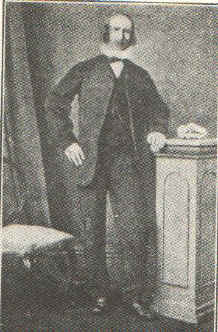
Mr Robert Snodgrass |
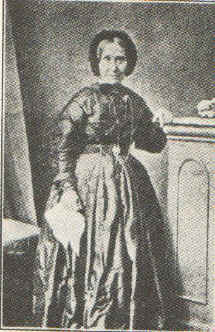
Euphemia Snodgrass |
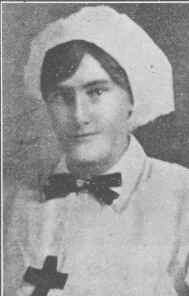
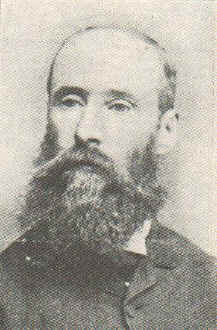
Mr George Snodgrass |
 |
Transcribed by Pattrick Mould in 2003, from the book "Back to Coma' Celebrations" page 86
ROBERT SNODGRASS, to old timers known as "Scotch lock," with his wife arrived in Manaro in 1848, to enter the employ of the Rev. E. G. Pryce, who resided at "The Grange." The couple lived in a two-roomed hut on the edge of the Roman Catholic portion of the old cemetery. There son, George, well-known in Cooma, and still alive, was born in April, 1849. After leaving the service of Mr. Pryce, Robert Snodgrass served in the Police Force at Cooma for some years. He died in November, 1889, his wife locally known as "Grannie" Pollock, dying about 16 years later. A son, "Bob" Pollock, in his youth was a
jockey riding "Randwick" and other horses for Mr. Brooks, of Gegedzerick. In after life "Bob Pollock" was a well-known Manaro saddler.
THE SNODGRASS FAMILY OF COOMA, NSW Our gg grandfather His brother Both Robert and James had a son named George.
An article by Colleen Levett in a historical booklet about Cooma recorded that a family named Pollock had arranged to migrate to Australia, but at the last minute Robert and his wife (partner?) replaced them and assumed their names. John Pollock (aged 32) and Jane Pollock (aged 24) are listed as passengers on the Emperor which arrived in Sydney in 1848. (NSW state government archives) My research suggests that this could be Robert’s younger sister Jean (Jane?) who had been in a proclaimed marriage with John Pollock from 14/7/1845, (marrying on 15/7/1848 and
having their first child a few months later). Who were the Pollock brothers , David and James (sons of Robert and Elizabeth Pollock) who discovered gold at Kiandra in 1860? (Kiandra is in the same area as Cooma) Are they nephews of the John Pollock who married Robert Snodgrass’s sister? Had John booked to come to
Australia to live and work with his brother Robert Pollock in the Monaro area? Robert Pollock wrote a letter to the Syd Morn Herald about his son’s gold claim (Extract from Historic Kiandra) In the turmoil of events at Kiandra it appears that no objective judicial inquiry was ever made at the time to determine who should properly be given the credit for the particular discovery which triggered off the rush. Now, long after the event, it seems impossible to be sure where the credit lies. Perhaps it should not go to one particular group, but to several.
The two chief contenders appear to be the Pollock brothers who came from the Murray side, and Gillon, Hayes and Grice from Monaro. Pollock brothers' claim to be the discoverers appears to rest on their own statements in published letters and on newspaper reports at the time. Letter to the Sydney Morning Herald, 4 February, 1860: Sir, Will you have the kindness to insert in the columns
of your valuable journal the following information, you will greatly oblige. We remain, The basis for Gillon, Hayes and Grice being given the credit for the discovery of payable gold in Pollock's Gully is not known. As late as 1956 the following letter appeared in the Cooma-Monaro Express: Sir, I wish to make a correction of a statement made by Mr. Arthur Goodman, which appeared in the Cooma-Monaro Express on February 10 as to who found first gold on Kiandra. C. M. Russell, Further info on Kiandra and the gold rush. The gold rush only lasted 2 years. There were valuable finds which soon ran out as it was shallow alluvial gold. It became a boom town within 2 months with 10,000 inhabitants, 25 stores, 13 bakers, 16v butchers, 14 hotels, a jail and a school. Over 2,000 prospectors lived in canvas tents there in the harsh winter of 1860 The first ski club in the world was established at Kiandra in 1861, whose inhabitants had started to use planks of wood to slide down the snow slopes. Kiandra is one of the highest towns in NSW. By 1861, pop only 250. it is now a ghost town, with only one building.
DISCOVERY OF GOLD
Having found a valuable and payable gold-field extending over an area of five miles (known as yet payable) on the Australian Pyreenees, I consider it a duty incumbent to inform the industrious miner that at present it is only workable for 3 months, owing to heavy falls of snow and the rapid drift, which remains till September. I and my brother being unable to proceed last winter and under necessity of returning although within a few miles of William Russell's station. Even supposing the next winter to be unusually mild and that the diggers remain on those plains - from the boggy nature of the ground and
crab holes, setting aside the steepness of some of the mountain trails, it were an impossibility to carrying or packing of provisions - this would prove an insuperable objection.
My motive in at present trespassing on your columns is to prevent the rushes which invariably take place on the opening of any new gold field, not, however, to deter any from visiting the locality, so that as eye-witnesses they may be perhaps better satisfied by the ensuing spring.
I refused to purchase about 500 oz. on Saturday last, until I receive from the assay office in Sydney its intrinsic value.
Yours very truly,
D. and J. Pollock.
Cobra Murra, January, 28.
I would say Mr. Goodman has been very much misinformed as he states Kiandra was found by a stockman named Pollock in the late 60's. I claim to be able to give the true facts as when gold was first found and the men who found it were my grandfather, the late William Russell, Senior, Berrigan, Black and McClean.
The party used to go prospecting at times in the summer months and on this occasion was working on what is known as Pollock's Gully on the south side of where Kiandra stood.
The gully came by the name owing to the Pollock brothers having their sheep camped in the head of the gully.
Pollocks used to bring sheep into the hills in the summer months and very often call at my grandfather's place at Denison, where he settled in 1848.
In the autumn of 1859, Robert Pollock called at Denison inquiring for my grandfather, as he said he wanted to see him very particularly.
Grandmother said "If you want to see him particularly, I will send John out with you, as he knows where they are working."
On arrival at the claim my father John heard the conversation which took place between Pollock and the party as that they may have found a payable gold field, and if they would allow him to take some of the gold he would find out.
After some discussion between the party they allowed him to take some of the gold and in less than a week's time there were 500 men on the field. I believe Pollock put in for the reward, also a couple of others, but I understand there was no reward paid.
That was in the autumn of 1859 - and heavy snow fell and all went away, and men started returning towards Christmas, and the big flow of people was from 1860-62, when it was estimated at 15,000 people.
My grandfather opened the pub at Denison while the big boom was on, and also supplied fat stock to some of the butchers on Kiandra.
|

 Monaro
Pioneers
Monaro
Pioneers